What a gold milling plant does
A gold mill is the section of a gold processing plant where run-of-mine ore is crushed, ground and classified before gold recovery. The job of a gold milling plant is to liberate gold from its host rock and produce a particle size that gravity, flotation or cyanidation can treat efficiently. Worldwide gold mine production reached an estimated 3,300 tons in 2024, according to the USGS Mineral Commodity Summaries. For a mine owner, that scale means mill design has a direct effect on tonnes per hour and cost per tonne. Xinhai reports it has delivered 600+ mine EPC+M+O projects across 100+ countries, which gives the engineering team a broad base of operational feed size data to draw on.
A complete gold milling circuit combines three stages. Crushing takes run-of-mine rock down to a size a grinding mill can accept. Grinding uses rod mills or ball mills to reduce the crushed product further. Classification returns oversize material to the mill and sends the right-sized product forward. You'll see the same sequence in most gold milling plants, but the equipment sizes and settings are never interchangeable between orebodies.
The plant is sized from data, not guesswork. Ore testwork tells you which crusher, mill and classifier combination will meet your throughput at the lowest practical energy input. If you're building or upgrading a gold processing plant, start with the milling stage's feed size and hardness before choosing recovery equipment.
The milling stage of gold processing
Gold is rarely found free. It's locked inside the host rock, often as fine particles inside quartz or sulphide minerals. Milling breaks that host rock down until the gold is exposed enough for a recovery method to work. The milling stage reduces ore to a particle size where gold can be recovered by gravity, flotation or cyanidation. You don't need to grind every ore to flour; the target size depends on what happens next.
P80 is the size at which 80% of the ore by mass passes a particular screen. A P80 of 75 µm means 80% of the mill product is finer than 75 µm. That number comes from grindability testwork and downstream process requirements. A gravity circuit may work at a coarser P80 than a flotation or cyanidation circuit, because fine liberated gold can be recovered by gravity before overgrinding wastes energy.
See how gold milling works for a stage-by-stage walk through the circuit and the equipment choices at each point. The route after milling depends on the ore type: free-milling gold may go to gravity and gold CIL, while sulphide ores often go to gold flotation before cyanidation.
Crushing circuits: preparing the feed
Crushing sits at the front of the gold mill. It reduces blasted or excavated rock to a size a grinding mill can handle without stalling or wearing out liners prematurely. The common equipment set includes jaw crushers, gyratory crushers, cone crushers, high-pressure grinding rolls (HPGR), and in some niche flowsheets hammer, impact or roll crushers. A jaw crusher is a primary crusher that compresses ore between a fixed and a moving jaw plate. Cone crushers and HPGRs often follow to produce a finer, more uniform feed.
Selection variables for crushing equipment include the maximum run-of-mine particle size, ore hardness and abrasivity, moisture and clay content, target discharge setting, hourly throughput, open or closed circuit operation, wear part life and site maintenance capability. None of these can be skipped. A high-clay ore, for example, may blind screens and force a different circuit than a dry, hard ore.
The ore milling basics guide covers the relationship between crusher discharge and grinding energy in more detail. If you know your ore's maximum feed size and work index, you can evaluate whether one or two crushing stages are needed before the mill.
Grinding circuits engineered to your ore
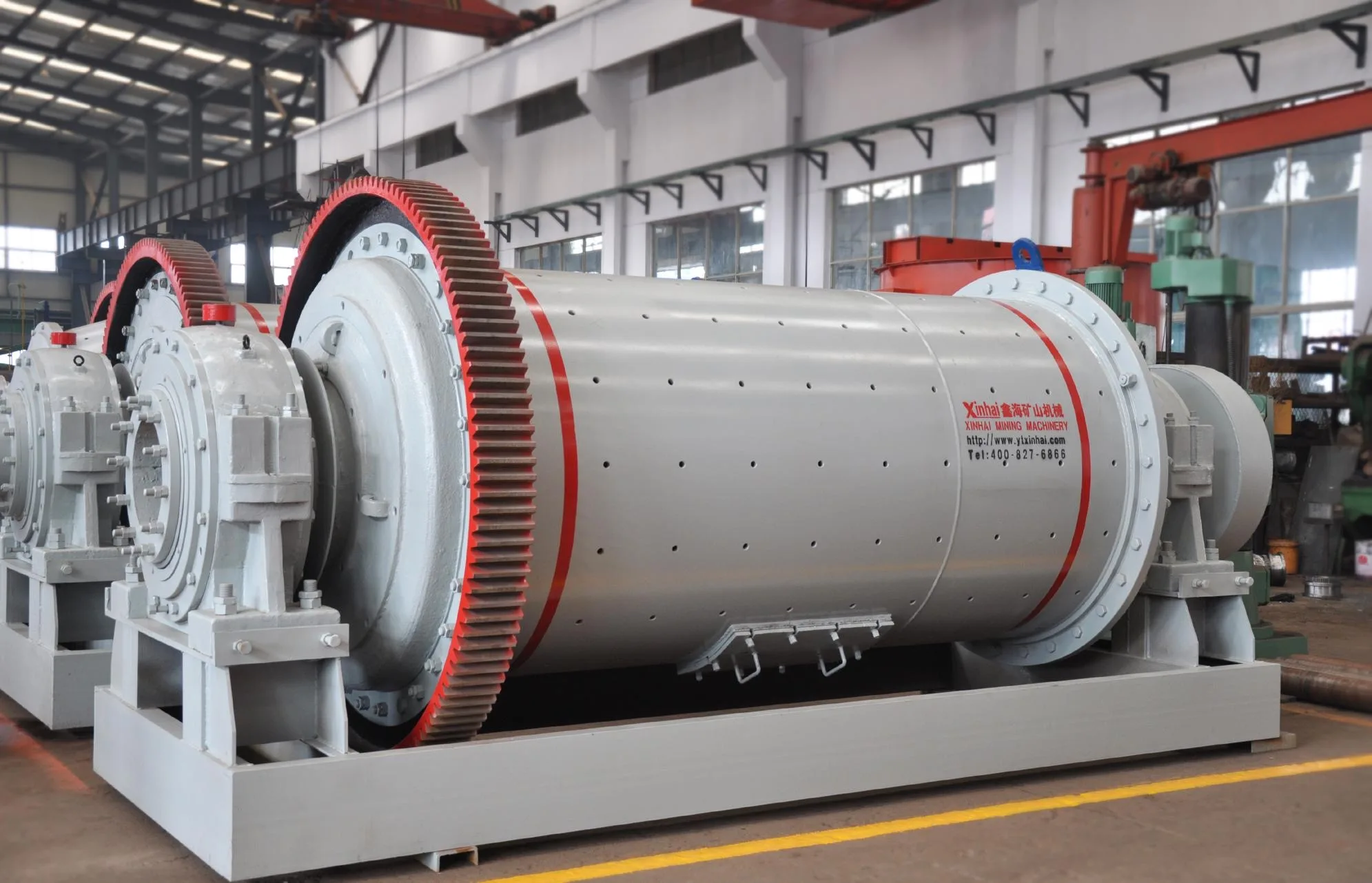
We design rod mills, ball mills and classification circuits based on ore testwork. Xinhai builds ball mills up to 7 m in diameter, with grinding media and liner selection matched to your ore's abrasivity. A rod mill is usually used as a first-stage mill when you want to avoid overgrinding coarse feed, while a ball mill handles second-stage or regrind duty. The mill diameter, length, effective volume, motor power, maximum ball charge and product size are all chosen from the testwork outputs.
The table below summarises the three main ball mill types you'll encounter in a gold mill.
| Mill type | Discharge behaviour | Typical position in a gold mill |
|---|---|---|
| Wet grate mill | Forced discharge through a grate; lower slurry level | First-stage grinding or circuits needing faster discharge |
| Wet overflow mill | No forced discharge; material leaves by overflow | Second-stage grinding or finer product |
| Dry ball mill | Dry feed and discharge | Water-short flowsheets or downstream dry processing |
Some supplier literature claims rolling bearings can save 20–30% energy compared with traditional sliding bearings. Treat that figure as a manufacturer's product statement, not a guaranteed result. Actual energy savings depend on the baseline mill, ore characteristics and measured power draw.
For a sense of how ball milling fits into different plant sizes, see the ball milling gold processing article. The mill is only one part; its liner, media and drive configuration must suit the ore's abrasivity and the desired product P80.
Classification: closing the loop
A gold mill rarely runs once-through. Most circuits use classification to split the mill discharge into fine product and oversize, then return the oversize to the mill. This is called closed-circuit grinding. Closed-circuit grinding means the mill's discharge is classified, and particles above the cut size return to the mill while the undersize advances to the next stage. It prevents energy being wasted on already-fine material and keeps the mill feed consistent.
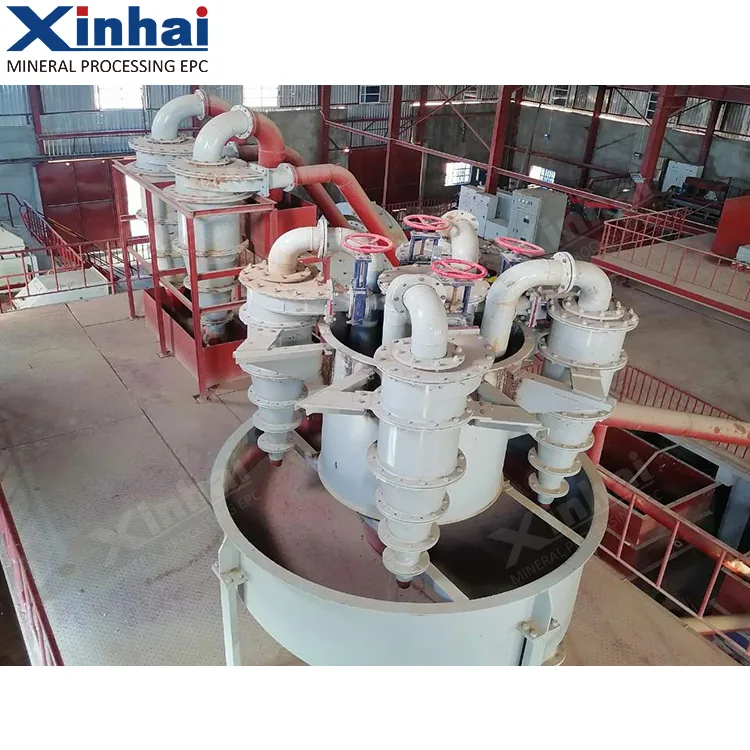
Hydrocyclones, spiral classifiers and high-frequency fine screens are the main classification devices. Hydrocyclones use centrifugal force to separate particles by size and density. They're compact, but their cut size depends on feed pressure, pulp density and solids concentration. Spiral classifiers are simpler and handle coarse sizes, while high-frequency screens give a sharp separation for finer product.
Selection variables for classification equipment include cut size, feed pressure and concentration, slurry density, throughput, classification efficiency, overflow fineness, underflow density, wear materials and the number of parallel units. A hydrocyclone battery, for example, may be sized by the number of cyclones needed to handle the mill discharge flow at the target pressure.
The how gold milling works article shows a typical closed-circuit arrangement with a ball mill and hydrocyclone cluster. For gold ore with a lot of coarse free gold, a gravity trap may be placed inside the grinding circuit to pull gold out before it overgrinds.
Testwork before design
Bond work index testing and ore characterisation at our CNAS-accredited laboratory tell us exactly how much grinding your ore needs. The Bond work index is a laboratory measure of ore grindability, usually expressed in kilowatt hours per tonne (kWh/t). It quantifies the energy required to reduce a given ore from a known feed size to a target product size. A higher work index means the ore is harder to grind and will demand more power per tonne.
The laboratory runs around 5,000 element analyses per month, backed by an industrial-scale pilot test base. Before a flow-sheet is committed, grindability, hardness and liberation data are used to confirm mill size, media loading and classification settings. You'll see the testwork reflected in the equipment selection and the energy estimate.
Xinhai reports it has 700+ technical experts and has served 2,500+ mines across 100+ countries. That experience is a useful check, but it doesn't replace your ore's own testwork. The about page lists the company's engineering and project capabilities. The CNAS accreditation is specifically tied to ISO/IEC 17025, as described by the China National Accreditation Service, so the laboratory data follows an internationally recognised quality system.
For a plant treating 1,200 t/d, the mill size and ball charge are determined from the Bond work index and the required P80. That target may be coarser for a gravity circuit or finer for a downstream cyanidation plant.
Design standards and project delivery
Xinhai's design institute holds a Class B metallurgical qualification, which supports the metallurgical design work for gold milling plants. The company also holds Class A qualification for general contracting of mine construction projects. Design work can be prepared to JORC, NI 43-101 or VALMIN standards when the project or jurisdiction requires it. NI 43-101 support is a compliant design output, not a certification of the mine or resource.
For international projects, the milling plant and recovery circuit are delivered under the company's EPC+M+O model. Xinhai reports 600+ mine EPC+M+O projects, 2,500+ mines served and 100+ countries, with 700+ technical experts. Those are company-published figures. They indicate broad experience, but your specific ore testwork remains the basis for equipment selection.
If you need to evaluate capacity against a defined daily throughput, the capacity pages show example plant configurations, including 1,000 t/d and 3,000 t/d gold plants. These are not quotations; they're starting points for discussions about your own feed.
From mill to recovery
After milling, gold is recovered by gravity, flotation, CIL/CIP or a combination. CIL and CIP can reach 99% recovery on suitable ores, but that figure is a capability, not a promise for every orebody. The mill product P80 and the presence of coarse free gold or sulphides determine which route makes sense.
Gold CIL plant uses carbon-in-leach cyanidation after milling. Cyanide is toxic, and its handling is governed by compliance, safety procedure and site-specific controls. The International Cyanide Management Code is a voluntary industry programme covering the production, transport, storage and use of cyanide. If your flow-sheet includes cyanidation, you'll need to build the mill-to-leach interface with those controls in mind.
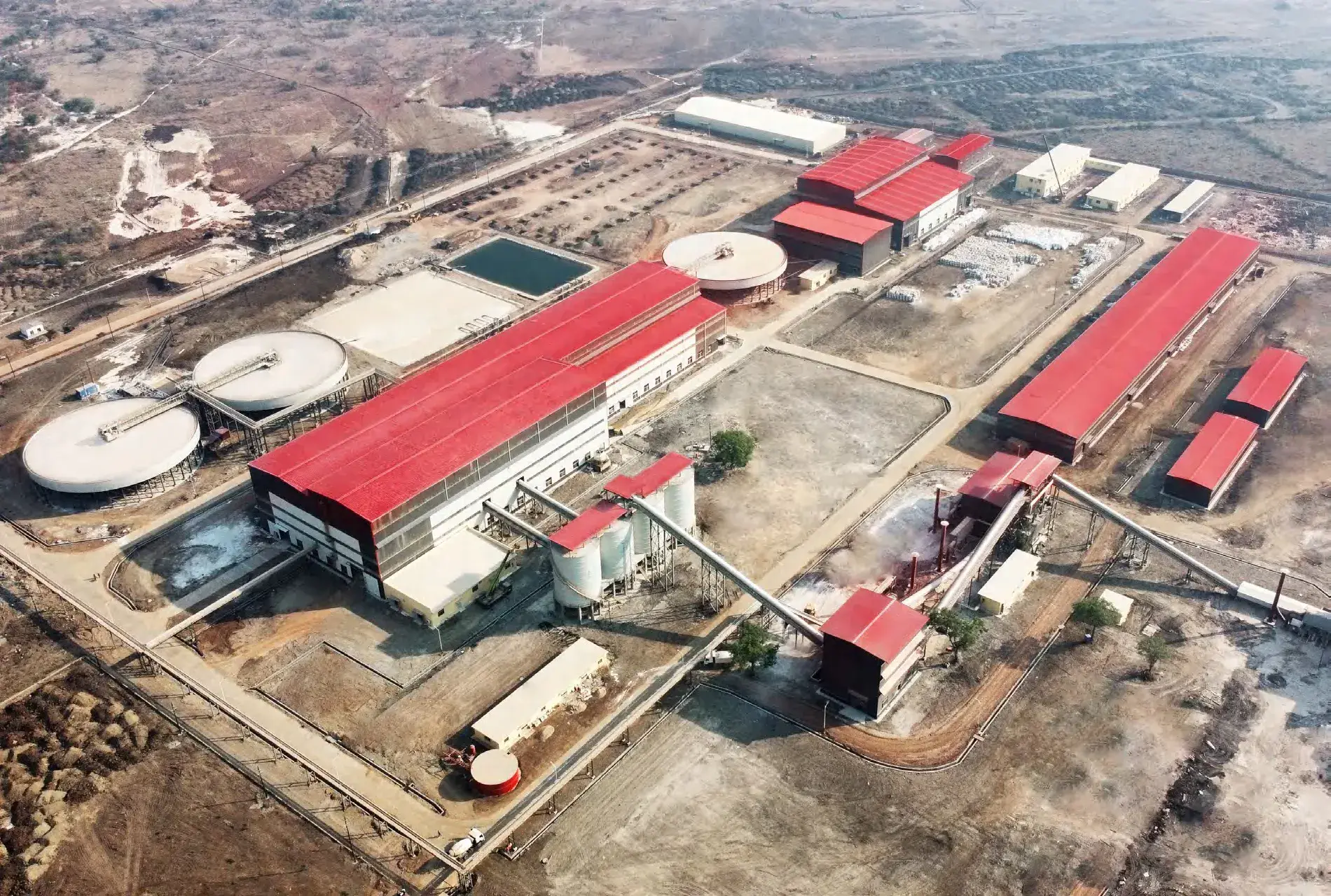
Flotation recovery works well for gold-bearing sulphide ores. See the gold flotation plant route for cases where the gold is locked in pyrite or arsenopyrite. The full gold processing plant view takes you from crushing and milling through recovery and tailings in one integrated design.
We design and build the full grinding circuit — crushing, milling and classification — sized to your ore and throughput. Whether you're starting from a drill core or expanding an existing mill, the design logic is the same: measure the ore, select the equipment, then confirm the flow-sheet before committing capital.