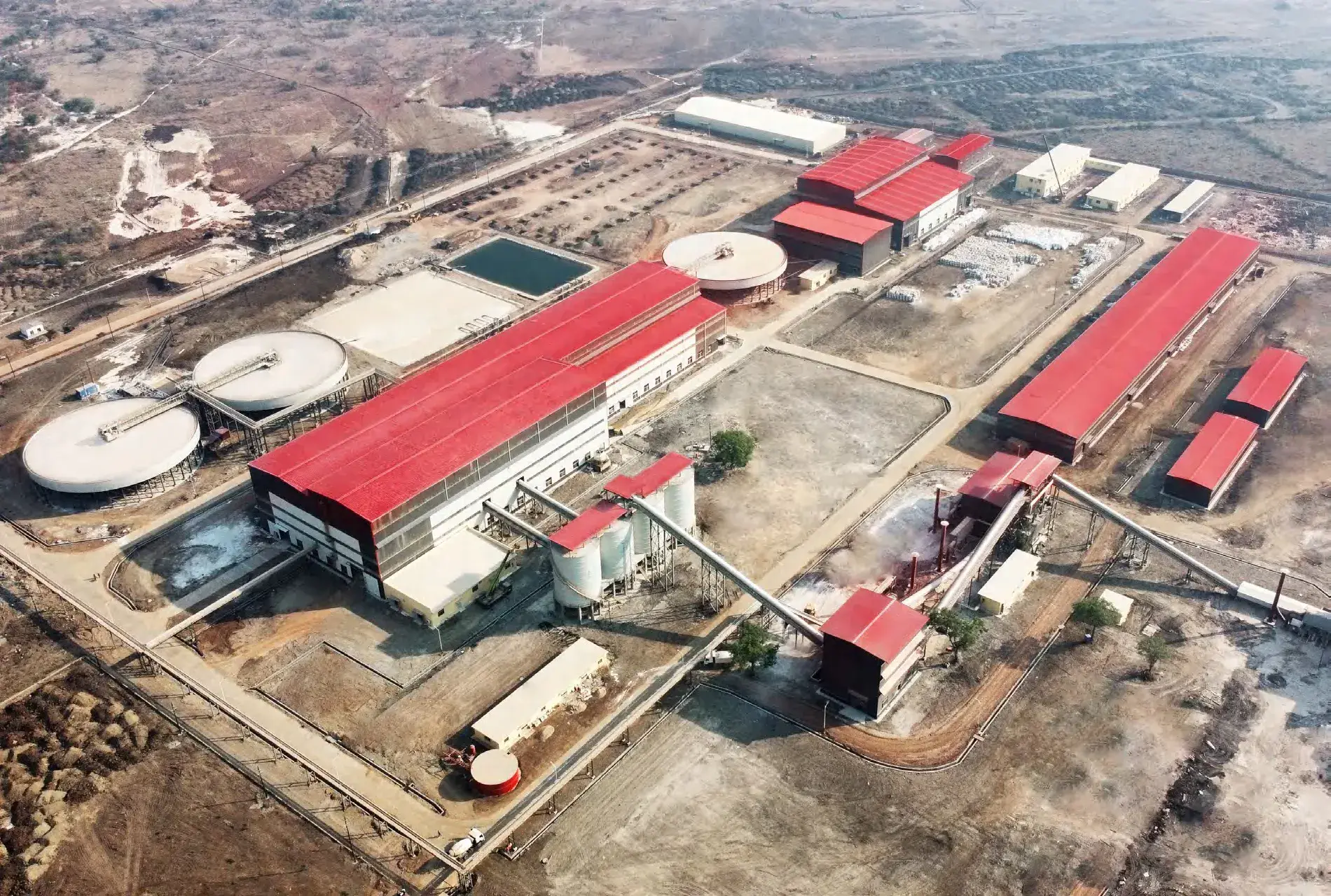
Gold processing plant for sale: match capacity to your ore
A gold processing plant for sale at goldmilling.com means a complete milling and recovery line, from run-of-mine ore to bullion or doré, built around a defined daily throughput. You'll see three standardised tiers here: 500 t/d, 1,000 t/d and 3,000 t/d. Each one reuses the same proven crushing, grinding and leaching circuit, scaled with larger equipment as throughput rises. The goal is not to force a mine into a box. It's to give you a reference point for capex, layout and delivery schedule before you commit.
You choose the tonnage. The engineering follows.
How gold plant capacity is sized
Capacity, sometimes called gold plant capacity, is the mass of dry ore a plant can process in a day, usually stated in tonnes per day (t/d). You can't pick a number from a brochure. Ore hardness, feed size, liberation size, gold deportment and tailings characteristics decide the practical range. Xinhai supports designs from 10 t/d to 50,000 t/d, according to its published engineering scope. For the standardised plants on this page, the three tiers cover the most common mid-size and large-scale project envelopes.
Before you lock a figure, run a proper testwork programme; see how to test gold ore for the parameters you'll need.
A 500 t/d plant is not simply a smaller version of a 3,000 t/d plant with every component reduced. Mill diameter, pump sizing, tank residence time and control loops all change non-linearly with throughput. That's why the three tiers on this page are engineered independently while sharing the same process logic.
The three capacity tiers, side by side
| Tier | Typical owner profile | What you get |
|---|---|---|
| 500 t/d gold plant | Mid-size operations, satellite deposits, first-step expansions | Proven milling and CIL/CIP recovery circuit; compact footprint; shorter delivery window |
| 1,000 t/d gold plant | Full-scale producers targeting a daily thousand-tonne throughput | Fully engineered equipment set, larger mills, higher-capacity thickeners and leach tanks |
| 3,000 t/d gold plant | Large operations needing proven larger-scale delivery | Expanded crushing and grinding train, multiple leach tanks, larger flotation cells if required |
Each tier on this page is an entry point, not a final design. You can request a proposal, and Xinhai will size the actual equipment after ore testing and process simulation.
Engineering and procurement behind the capacity
FEED is the front-end engineering and design stage after feasibility study and before detailed design. It turns a conceptual flowsheet into executable engineering parameters: process flow diagrams, plot plans, preliminary P&IDs, long-lead equipment lists and a CAPEX estimate. In mining, FEED typically locks in more than 70% of life-of-mine cost, which is why you want this work done by people who build plants, not just draw them.
Xinhai's mine design institute holds a Class B metallurgical qualification, not Class A. The institute has mining, mineral processing, civil, electrical, automation and steel structure departments with more than 100 designers, according to the company. Deliverables can be prepared to JORC, NI 43-101 and VALMIN standards. A gold processing plant for sale from Xinhai is not a catalogue item; it starts with this engineering stage.
The engineering also covers the full lifecycle. Xinhai's design range spans 10 t/d to 50,000 t/d, and the group reports 2,500+ mines served and 600+ EPC+M+O projects across 100+ countries. The EPC+M+O model integrates engineering, procurement, construction, mine construction management and mine operation management into one scope. See gold processing plant design for how this plays out in a gold context.
Equipment scaling: what changes as capacity rises
Larger plants don't just use more of the same equipment. At higher throughput you'll see different mill diameters, pump sizes and tank volumes. Xinhai reports three manufacturing bases totalling about 110,000 m² and more than 1,000 equipment types. The large equipment range includes ball mills up to 7 m in diameter, flotation cells of 320 m³ per cell, leach tanks of 20 m × 20 m and thickeners up to 100 m in diameter.
For a 500 t/d plant, a single grinding line often works. At 3,000 t/d you may split the feed across parallel mills and leach trains. The choice depends on ore hardness, target grind size such as P80 of 75 µm, and whether you're feeding a CIL, CIP or flotation circuit. P80 of 75 µm means 80% of the ground product passes a 75 µm screen.
Detailed equipment lists appear on the gold milling plant page and the individual capacity pages.
Recovery routes and cyanide compliance
Gold recovery from these capacity tiers uses gravity, flotation, or cyanide leaching. CIL and CIP circuits can reach 99% recovery on suitable ores, according to Xinhai; that is not a guarantee. The actual figure depends on ore mineralogy, grind size, reagent control and residence time. Compare the differences between CIL and CIP and the leaching parameters before you choose.
Cyanide is toxic, so any cyanide-based circuit must be run under strict safety and compliance procedures. The International Cyanide Management Code is a voluntary industry programme for gold and silver mining operations covering production, transport, storage and use of cyanide. Signatory operations are certified through third-party audits. Xinhai's design team can help you align with local regulations, but the duty of compliance always sits with the operator. See gold CIL plant design for a full cyanide circuit overview.
Request a proposal for your gold plant capacity
If you're evaluating a gold processing plant for sale, start with your ore, not the equipment list. Send a bulk sample for testwork, or share existing metallurgical data. Xinhai's CNAS-accredited laboratory runs about 5,000 element analyses a month and carries out Bond work index testing and roughly 200 metallurgical tests a year. These numbers come from the company's published lab capacity. The design team will then match a plant tier to your ore and submit a proposal.
Contact the Xinhai team through the enquiry page to request a proposal. Compare the 500 t/d, 1,000 t/d and 3,000 t/d pages if you need specific layouts and equipment lists.