Gold mining in Ghana: what owners are weighing
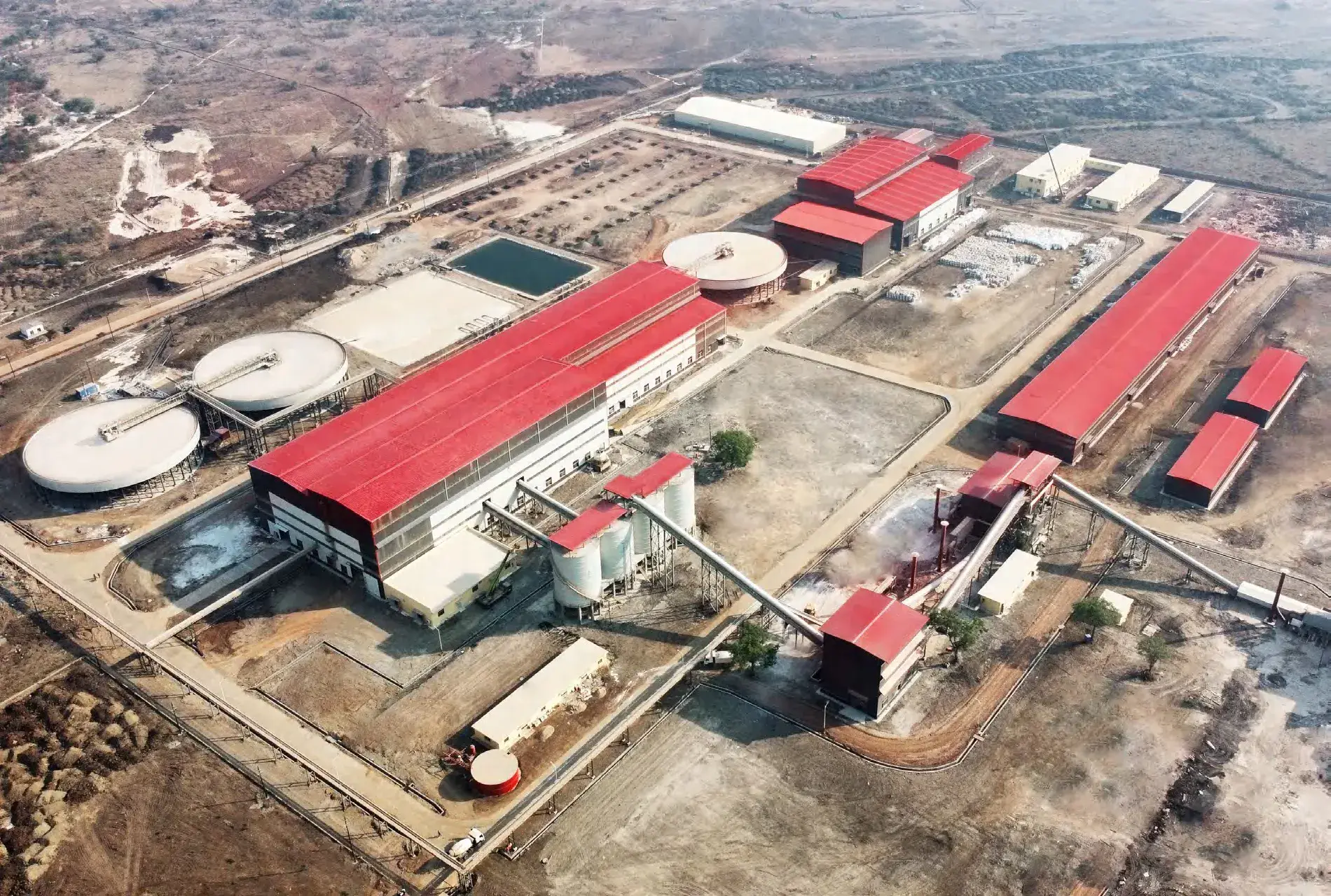
For a mine developer, gold mining in Ghana is not a single flowsheet. Ore bodies vary from free-milling saprolite to hard sulphide and transitional material, and the choice between gravity, flotation, leaching or a combination shape capital cost, operating cost and recovery. Xinhai has delivered a gold mining and processing contracting and operation project in Ghana, so the questions below come from practical plant work, not from a generic brochure.
According to the USGS Mineral Commodity Summaries 2025, worldwide gold mine production was an estimated 3,300 tons in 2024. Ghana remains one of Africa's leading gold producers, and new ghana gold projects tend to involve tighter ores, deeper pits and more complex processing than the oxide plants of the past.
What the Ghana contract mining and operation scope covers
Contract mining and operation is the “O” component in Xinhai's EPC+M+O model. In plain terms, it means Xinhai manages mine engineering, mining, processing and tailings storage facility (TSF) operations under an agreed commercial structure. Xinhai reports 2,500+ mines served, 600+ EPC+M+O projects and 100+ countries covered, according to the company's published figures. The Ghana project is a gold mining and processing contracting and operation engagement.
The operating agreements can be shaped several ways:
| Model | What it means for a mine owner |
|---|---|
| KPI turnkey operation | Xinhai commits to output, technical indicators and cost control |
| Profit sharing | Revenue is split based on output, recovery and cost efficiency |
| Custom agreement | Term sheet is matched to the orebody and owner's capital position |
| Labour service | Xinhai supplies management and key technical staff, owner retains assets |
| Fixed cost contract | A fixed fee covers the operation, reducing owner's variable risk |
| Cost + profit sharing | Base cost plus incremental profit split |
Each model shifts risk differently. For a Ghana gold mine with stable ore and good metallurgy, a profit-sharing structure can align incentives. For a tighter project, a fixed cost or labour-service route often fits better.
EPC+M+O: engineering before equipment, not the reverse
EPC+M+O is a bundled engineering, procurement, construction, mine construction management and mine operation management service. The sequence is the point. You do not buy a mill first and then wonder whether the ore responds to gravity or cyanidation. The flow is:
- E — Engineering: ore testwork, flowsheet development, detailed engineering design and tailings design.
- P — Procurement: equipment manufacturing, sourcing, packaging and transport.
- C — Construction: civil works, structural steel, equipment installation and commissioning.
- M — Mine construction management: design, procurement, construction and commissioning control.
- O — Mine operation management: mining, processing and integrated production management.
That order reduces rework: a flowsheet is locked from ore testwork, equipment is matched to the flowsheet, and construction is planned around installed equipment. Xinhai's design institute holds a Class B metallurgical qualification. That is not a Class A licence, and Chinese qualifications are not automatically valid in other jurisdictions. Design work can follow JORC, NI 43-101 or VALMIN reporting formats where the owner needs them. A CIL plant or CIP circuit should be a consequence of test data, not a starting assumption.
Processing routes that suit Ghana gold ores
Ghana gold ores usually demand a combination of routes. Gravity recovers coarse gold early. Flotation concentrates sulphide-hosted gold before leaching or off-site sales. Cyanidation in CIL or CIP dissolves fine gold from oxide or milled sulphide material. Heap leaching suits lower-grade oxide or weathered rock where fine grinding is not justified.
On suitable ores, CIL and CIP recovery can reach 99%. That is a design target, not a guarantee. Gold recovery methods for ghana gold projects should be selected after ore testwork, because free-milling ore and preg-robbing or refractory ore need completely different circuit arrangements.
Cyanide is toxic. Its storage, transport and use are governed by safety and compliance procedure, not by a catalogue. The International Cyanide Management Code is a voluntary industry programme covering production, transport, storage and use of cyanide, and signatory operations are certified through third-party audits.
Equipment, automation and scale: what Xinhai can supply
Xinhai's three smart manufacturing bases total about 110,000 m² and support over 1,000 equipment types for plants up to 50,000 t/d. Large equipment includes a ball mill of φ7 m, flotation cells of 320 m³ single-tank volume, leaching tanks of 20 m × 20 m and thickeners of φ100 m diameter. Those are not catalogue promises; they are upper-bound footprints for design conversations.
Automation is not an add-on box. Metering, reagent dosing, sampling, online particle size, pH and XRF analysis, and ball mill noise or condition monitoring all belong in one control architecture. But instrument accuracy alone does not equal process control. Ore variability, control strategy, actuator response, redundancy, calibration and field maintenance capability must be designed together. For a 3,000 t/d gold plant, that means the control system has to handle fluctuating feed grades without manual intervention.
From testwork to operating Ghana gold mine
Before you commit to a Ghana gold plant, run the testwork. Xinhai's CNAS-accredited laboratory handles around 5,000 element analyses per month, plus Bond work index testing and roughly 200 metallurgical tests a year. That volume matters because it means the lab sees enough ore variety to know when a flowsheet is being forced.
Xinhai reports 700+ technical experts across engineering, mineral processing, automation and construction. The Ghana project is one of the company's gold processing contracting and operation references, alongside a 15,000 t/d gold processing EPC in Guinea and a 4,000 t/d gold carbon-in-pulp plant in Kyrgyzstan, according to the company's published figures.
You can start with a gold processing plant discussion, but keep the initial brief simple: ore type, grade, tonnage, location, water and power constraints. That is enough for a first flowsheet screening.